




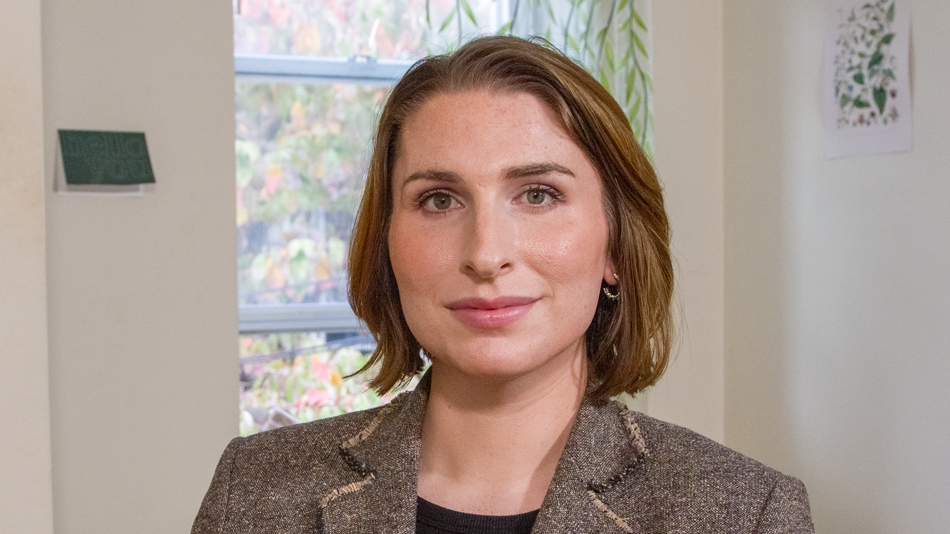
My name is Via Bernardo Abolencia. I’m from Jamaica, Queens, New York.
I ended up coming out to my parents when I was 12 years old. It was very awkward. I approached my parents while they were watching a telenovela on the couch, and I came out to them and told them, “I think I’m not a girl, and I also think that I like girls.”
I remember my parents just being silent, not really saying anything back. I interpreted that silence as, “We don’t accept this, but we also don’t wanna reject you as our child,” which is a very Filipino way of communicating. It’s indirect. It’s through behavior. It’s through silence.
I wanted to find other people who were like me, so I did what any ’90s kid would do. I went to the internet, and I found trans kids and trans adults who shared a lot of information with me about what it meant to be trans, what every letter in LGBTQ meant. I also realized that Transgender Day of Remembrance was November 20th, which is significant to me because November 20th is also my birthday.
And when I found out that Transgender Day of Remembrance is a national day of mourning for all the trans people we lost, I was shocked. And I also came across this pseudo-statistic that said that on average, a trans person only lives until they’re 30. And I did the math. I was like, “Okay, if I’m eight or nine right now, I really only have 21, 22 years to live, so I might as well make the most out of those years if this is… if my life could end at any point.”
So I think since I was very young, I was aware of mortality. Because of that, I sort of rushed through life, where I wanted to pack in as much as possible and accomplish as much as possible.
Since I was very young, I was aware of mortality. Because of that, I sort of rushed through life.
I ended up really focusing on my career, had a bunch of interesting jobs, really focused on financial security, work security. I work in healthcare and I worked on the COVID response in the Northeast, working 12, 18-hour days trying to respond to the pandemic, and I ended up experiencing and witnessing a lot of sickness and death during the pandemic. And then after working during the pandemic, went straight into graduate school, did two master’s degrees, went straight into a corporate job after that.
When I was in my first post-grad job. I remember being very stressed during the time. I was prepping for a meeting and I realized that I couldn’t read my notes. I could see the words, I could see the letters. I knew… I knew what the words were, but it’s like my brain wasn’t … it wasn’t capturing the words. So that’s when I decided I need to see somebody.
I ended up seeing a bunch of specialists, primary care folks, neurologists, and went through a bunch of testing to try to figure out what was going on. And the diagnosis was essentially, you put your body through so much stress during the pandemic, but also before that. Your nervous system is reacting to that stress. There is no cure for this other than to slow down and to rest. It wasn’t until I had my brain scare and I figured out that, like, I couldn’t read, where I was actually forced to slow down and realize that no, living a good life actually means not rushing through it. It actually means filling it with very present moments and slowing down.
During my recovery, because I’m an avid reader, I was … I really wanted to make sure that my reading capabilities were back to where they were before. I ended up watching a lot of stand-up comedy because punchlines and jokes, they’re short and they’re emotionally engaging. And according to my doctors, those are the type of things that your nervous system and your brain will hook onto. I would follow along with the jokes. I would try to write them down, and I would do this for hours and hours and weeks and weeks until I felt like I could read and speak to the same level that I did before my brain regression.
At some point, I decided, let me just try this. So I went to my first ever open mic. People laughed at some things, and they were silent for others, but I remember leaving the stage thinking, “Oh, that wasn’t that bad. I have to do it again.” Ended up enjoying it and being really good. I made it to the New York Queer Comedy Festival finals. I performed at the Asian Comedy Fest and Filipino Comedy Festival, do a bunch of shows around Brooklyn and New York. I recorded a 30-minute special.
And something that’s really interesting is I recently went back to my parents’ house to clean some stuff up, and I found my elementary school yearbook from 2005, which is when I was 12 and is the year that I came out to my parents. I remember being really depressed in that year, but in the yearbook were superlatives, like the best of or most likely to, and my classmates had voted me as most happy, most kind, most likely to succeed, and most likely to be a comedian.
And I thought it was a really fun full circle moment because for so long I had forced myself to be this successful adult even when I was a child. In truth, who I was as a child was this very playful, jokey person, and it took a brain scare to make me come back to that again.
Which is why now when I think about trans adults or even trans kids and what they have in their minds about who they should be or how they should be, trans kids should just be kids. You know, if that was the truth of who I was and that’s what other kids were seeing in me, I wish I let myself be that for a little bit longer instead of having to rush through life so much or feeling like I had to rush through life because of what was happening to trans people then and is still happening to trans people now.


Share